
Agere Contra, California
"You brought me into the wilderness and set me a feast."

The Ignatian concept of agere contra isn’t one that laid its hooks into me until I encountered it in Colleen Dulle’s memoir, Struck Down, Not Destroyed: Keeping the Faith as a Vatican Reporter. It hasn’t let me go since then: it percolates in my prayer, creeps into conversation. It’s a lacquer painted over the lens of my spiritual life in this season.1
I had the chance to interview Colleen about her book last month. It was a boon to dialogue with someone of her incredible expertise and ascendant profile, and a balm to encounter someone with whom I felt a kinship — Colleen is just a few years younger than me, and also a parent, also Jesuit-educated, also committed to keeping her lip color fresh for the duration of our discussion. I’m grateful for her generosity in allowing me to subject her to live spiritual direction in front of a studio audience, and I’m moved by what our time together unearthed in my own reflection.
The link to our livestreamed conversation can be found here.
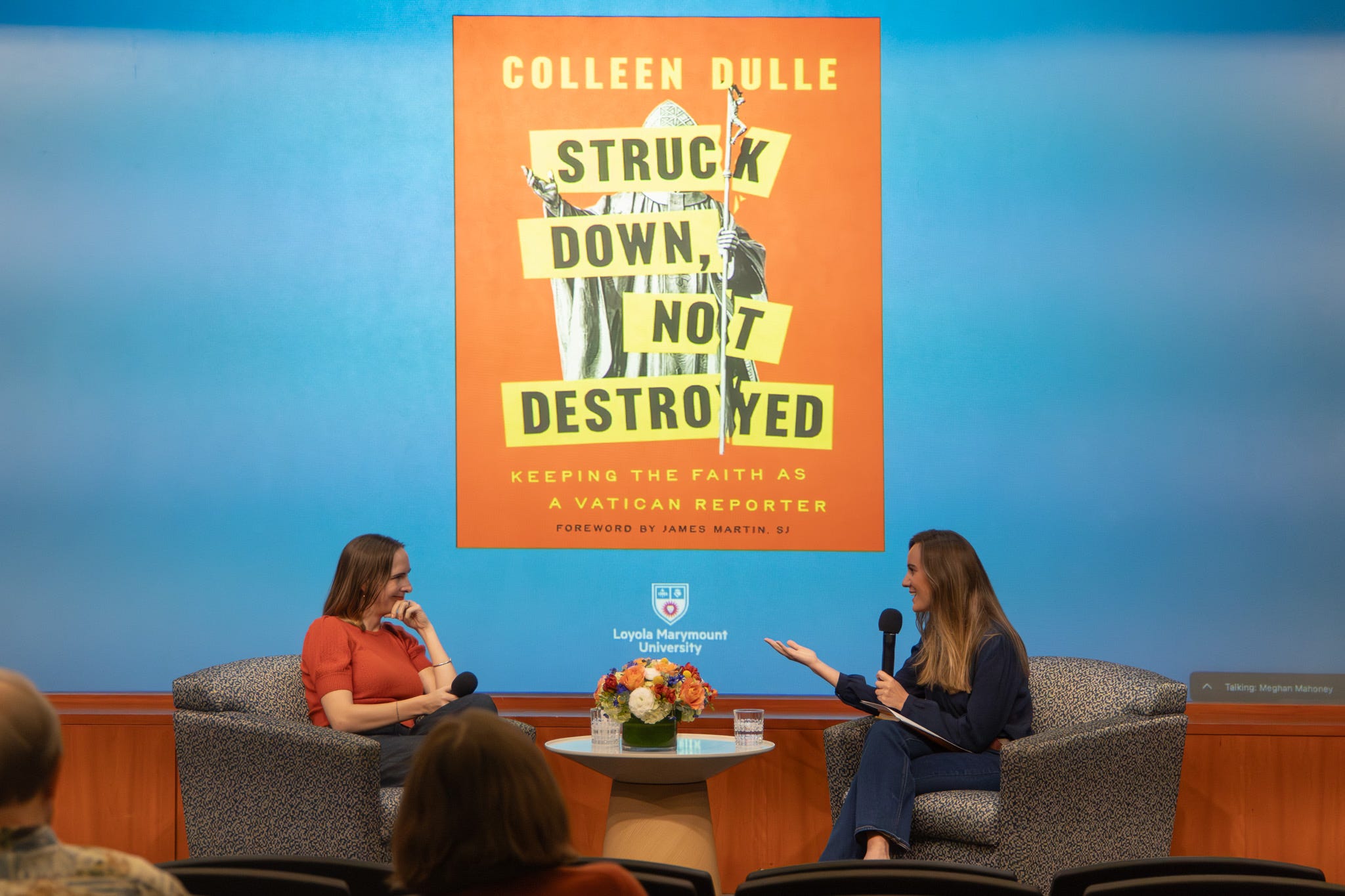
Agere contra, or the Ignatian concept of “acting against,” that is, finding yourself in desolation and showing up anyway, echoes much of what I’ve felt during my years spent in California. This beautiful place has given me so much. “In the wilderness, you set me a feast,” writes Sarah Bessey in A Rhythm of Prayer. And yet, so much of what was served was nothing I wanted. And yet, I kept myself seated at the table anyway. And yet.
This season of life in LA is drawing to a close. There’s no firm deadline on it, but the departure date is emerging, and I’m hauling a mixed bag of grief and gratitude as I broach this threshold between now and what’s next. Here in this place where I felt the whiplash of resistance and affirmation, I kept showing up to the life I was invited to here. And God, it was good. And God, it was hard. I’m sanctifying these years with my unflinching gratitude. I’m walking away from this wrestling, blessed.
Elsewhere —
“The miraculous is at our fingertips, waiting to be revealed, if only we aren’t too scared of the stench.” Alli Bobzien is offering up some of the best writing on women of the Bible out there, and she was featured in Catholic Artist Connection last week!
I took my toddler for a walk around Barnes & Noble a couple weeks ago, and he tore this singular book off the shelf before beelining his way to the Children’s Section in the back of the store. Did he know Eric A. Clayton had reviewed it for NCR?
Renée Darline Roden’s piece in RNS about her evocative Lenten practice has me reflecting anew on what solidarity looks like in this moment.
My copy of Rilke’s Letters to a Young Poet (along with The Book of Hours) is tucked into the backside of my Jeep’s passenger seat. I don’t remember how it ended up there, but at least I know where to find it. Perhaps if I’m ever stranded roadside someday, they’ll keep me company? In any case, I loved Nick Ripatrazone’s reflection in America about Rilke’s Letters and Lent.
Father Eric Immel, SJ, baptized my son. Ebullient and magnanimous, he has a distinctive gift for close, careful listening that begets gentle, generous companionship. If he’s ever been distracted in my presence, I’ve never felt it (I need to work on this). It’s a special treat, then, to have Eric and his pal, Father Damian of Field Notes from the Vineyard, in my ears on their new “Two Jesuits Talking” podcast. Listen here.
Agere contra, or to go against, refers to an Ignatian spiritual practice of doing something we wouldn’t normally do in an effort to expand or deepen our understanding of how God is at work in our lives. For the author of the memoir, agere contra meant attending Latin Mass, even though it wasn’t her liturgical preference, and even though she feared presumed ideological differences between herself and that particular worship community. For me, it meant making the decision to pursue long term plans to remain living in Los Angeles. Agere contra is not driving the wrong way down a one-way street in our spiritual lives; such practices should never lead us to danger or harm or distance from God. Rather, the practice should disrupt where we might be spiritually complacent or embolden us to counter habits that might be serving our egos rather than our souls.